

Between November 2023 and May 2025, I published 31 interviews with authors of books about animal rights, veganism, and related social justice issues. During this summer, I’m taking a break from this schedule to prepare for a second series of author interviews to be published starting in the autumn. Meanwhile, I’m publishing a five-part introductory series of author interviews grouped by theme. The themes are vegan living, animal ethics, social justice, animal exploitation, and narratives.
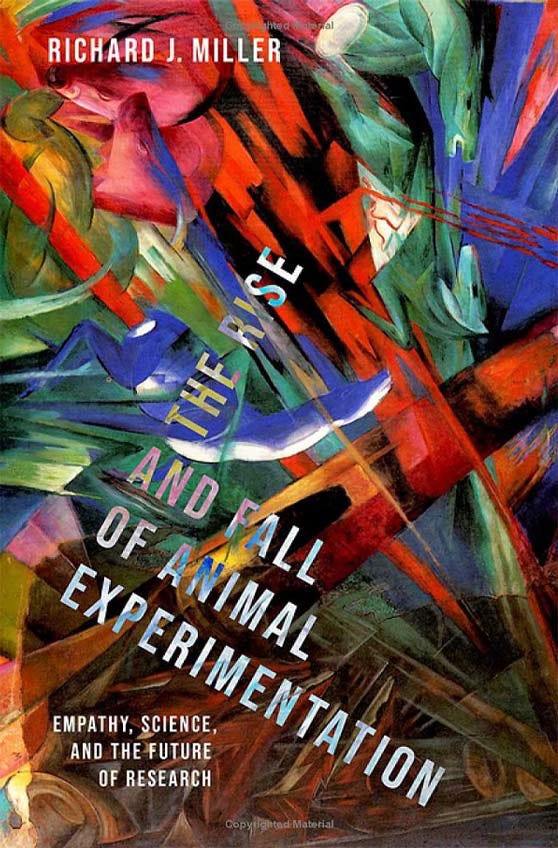
As someone who attended a three-year course in French cuisine and hotel and restaurant management but turned away from a career in the kitchen and dining room after becoming a vegan, I automatically feel an association with anyone who trod a similar path away from animal exploitation. Richard Miller, for example, “suppressed his disgust” from working many years in animal research to emerge as the author of The Rise and Fall of Animal Experimentation: Empathy, Science, and the Future of Research. His take on change behind the laboratory wall was encouraging.
The perceived need to use animals in biomedical research is rapidly disappearing in the rearview mirror. Nevertheless, most scientists have been taught to think a certain way about how to conduct biomedical research and the use of animals is very much part and parcel of this enterprise. […] On the other hand, clever young scientists who do not necessarily buy into the old ways of doing things are pushing the field forward using new human-centred research paradigms that don’t require the use of animals.
A chimpanzee, Nim Chimpsky, was used in scientific research, but in extraordinary circumstances. Elizabeth Hess wrote his biography because
When I asked her how she had become interested in animals, Stephanie LaFarge [a therapist who worked with young offenders of animal cruelty] told me that she had raised a baby chimp for her thesis project at Columbia University: Nim Chimpsky! Stephanie was the first to recount Nim’s story to me and I was immediately hooked.
Nim lived in a house with a family in suburban America and was the first chimpanzee to be taught American Sign Language. “No one knew what had happened to him,” Elizabeth said in our interview. She had to find out and dedicated herself to writing Nim’s biography.
An example of animal exploitation that doesn’t wear the scientists’ respectable white coat is animal festivals. In her book, Forget the Camel, Elizabeth MeLampy described animal festivals as entertainment for people who enjoy watching (and participating in) animals being killed, harassed, terrified, and paraded on display. She told me,
I don’t think tradition is a good enough reason to continue harming animals year after year, especially when these events essentially reinscribe the commodification and disposability of animals.
The greatest number of animals, meaning land, sea, and air creatures, are exploited in the ways we produce food for human consumption. Josh Milburn’s Food, Justice, and Animals: Feeding the World Respectfully explores the ethics of eating animals.
I begin with liberal political philosophy and animal rights. I’m interested in asking what combining these philosophical traditions can tell us about the kind of food system that we should embrace.
The significance of eating animals was central to my interview with John Sanbonmatsu about his book, The Omnivore’s Deception, a direct critique of Michael Pollan’s The Omnivore’s Dilemma: A Natural History in Four Meals. John explained that
Pollan’s book was a critique of the environmental and communitarian losses that had accompanied industrialized animal agriculture, but it was also an attempt to smother any lingering public doubts about the moral virtues of meat-eating. Pollan attacked animal rights directly and at length in his book, and he also personally killed dozens of animals with his own hands—killing chickens on Joel Salatin’s farm, and shooting a pig in a forest—in order to write about his experiences.
John spoke about three deceptions related to consuming animals as food.
First, the animal industry deceives the public each day by obscuring or papering over the violence at the heart of the food system. Second, prominent critics like Michael Pollan, author Barbara Kingsolver, and animal behaviorist Temple Grandin are deceiving the public by telling them that they can have their meat and their conscience, too. And third, that we deceive ourselves by refusing to acknowledge or take responsibility for the vast cruelties we inflict on other beings.
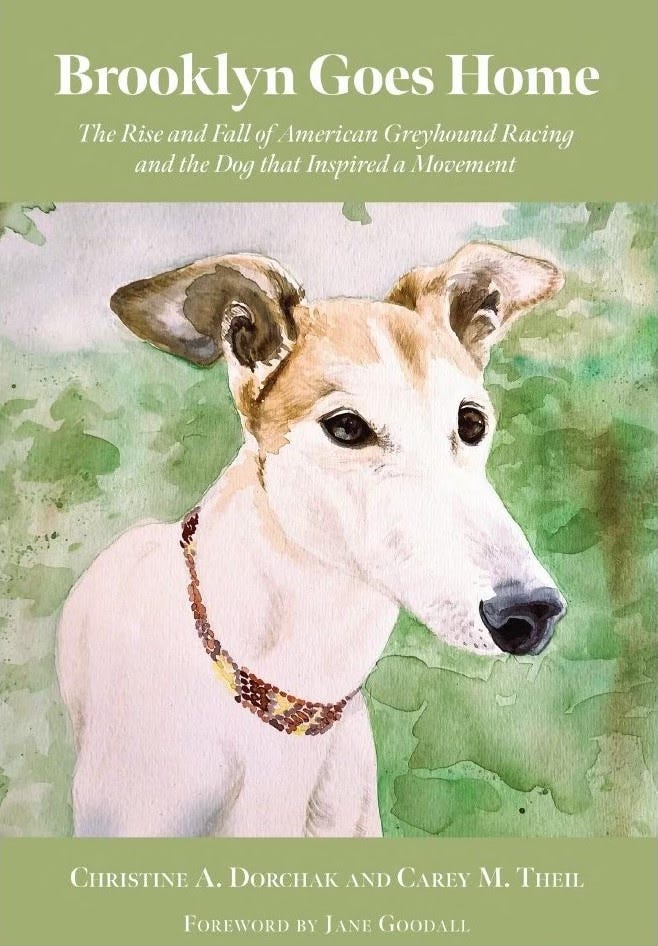
While many of us are fortunate to share our homes and lives with rescued companion animals, their exploitation, from neglect to cruelty, persists. In Brooklyn Goes Home: The Rise and Fall of American Greyhound Racing and the Dog that Inspired a Movement, authors Carey Theil and Christine Dorchak investigate the cruelty inherent to dog racing and their campaign to outlaw it throughout the world.
While we definitely wrote Brooklyn Goes Home for anyone who has ever loved and lost a dog, our book isn’t just for dog advocates (or for those who want to end greyhound racing). The strategy we used of seeking incremental change while staying grounded in our mission, can be applied to any fight for social justice. We learned to stay true to your goals and to learn from our mistakes. We came to understand and accept that sometimes we had to lose to win. In fact, on more than one occasion, horrible defeat opened up a gleaming path to victory.
Also working on a global platform, but with a specific focus on the country of Nepal, Julie Palais’s children’s book, Sathi, seeks to change hearts and minds. With fun illustrations by Jenny Campbell, Sathi inspires children to be kind to the animals they see in the streets. Julie donates proceeds from the sale of Sathi to organisations helping street dogs in Nepal.
I thought that if people read the book and empathized with the situation that the dogs found themselves in, then maybe they would think twice before abusing a dog in the future.
Another children’s book, Little Red Hat, by Bridget Irving is about wolves with the story told entirely with illustrations. Bridget told me that she
set out to tell the wolf’s story but soon realised I wanted to retell both the wolf’s and the child’s stories. I see them as connected, friends, not enemies. But I wanted to do this with a safe encounter between the two. Safe for the vulnerable child and the endangered wolf. So, Red has a toy wolf, and the ‘real’ wolves remain outside.
Animal exploitation is the theme that connects these authors and their books. It’s noteworthy how different each one is in telling the stories of the animals who humans abuse. Along with articulating a future where animals, including humans, could peacefully co-exist.
Thank you especially for this one, Kim. Somehow The Omnivore’s Deception has escaped my notice — before I even finished reading I put it on my books list (a literal list I keep on my phone!).