

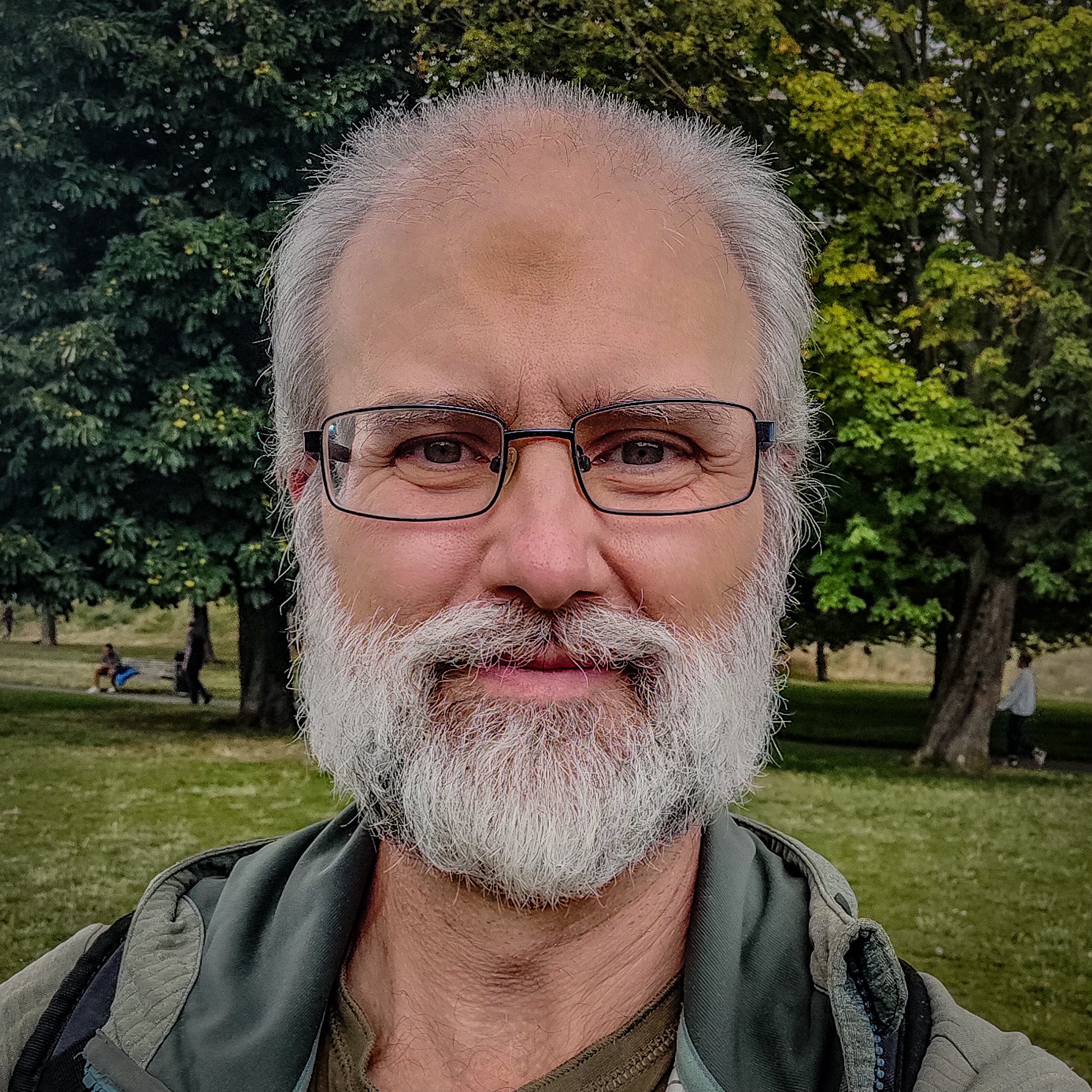
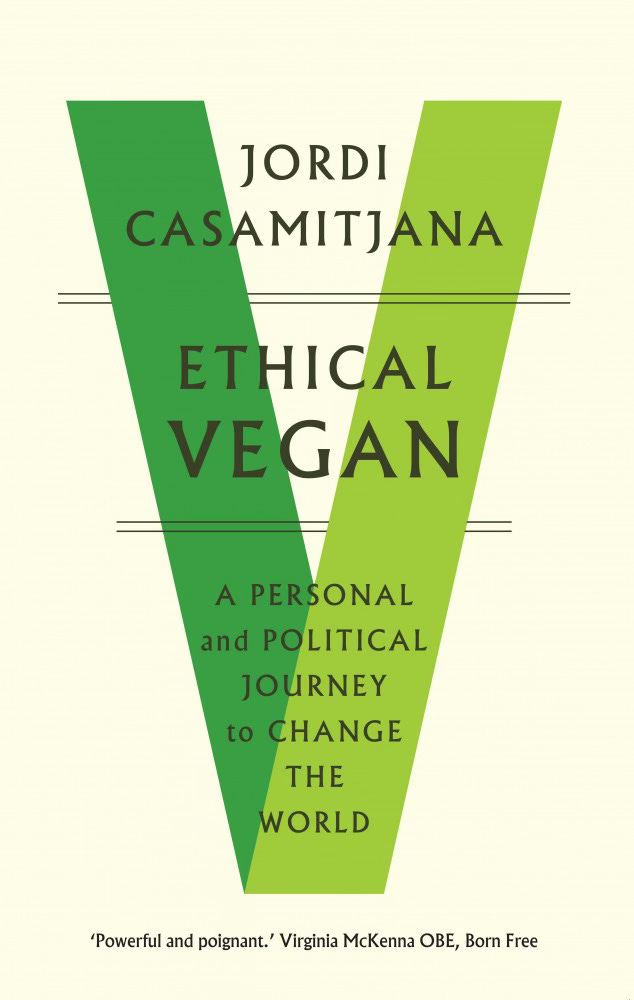
Jordi Casamitjana is a vegan zoologist who specialises in animal behaviour. He is the author of two books about living as a vegan and animal rights. The first is called Ethical Vegan: A Personal and Political Journey to Change the World, and was the focus of an interview I published here in 2024. His new book is Why Vegans Don’t: A philosophical guide to vegan behaviour and is available here. He has been involved in different aspects of animal rights advocacy for many years, including involvement with the first successful prosecutions under the Hunting Act 2004.
You won in 2020 a landmark legal case that confirmed ethical veganism is protected under the Equality Act 2010 in the UK. This is the first time veganism has been legally recognised and protected in any jurisdiction in the world. What have been the consequences of this historic ruling?
You could see the positive effects of my legal victory immediately after it happened. I was one of the first beneficiaries as the recognition of ethical veganism as a protected characteristic was ruled in a pre-hearing in Norwich Employment Tribunal that allowed me to pursue my discrimination case further, and win that one too, a few months later (which means I was the first person who won a case in court based on the newly established protection). But even before that, the ruling had already made some very quick changes. For instance, the British fire service began to automatically issue vegan leather boots to vegan firefighters (something they had been struggling to achieve for a long time), and even the Scottish Freemasons changed their centenarian rituals to allow non-animal leather to be used in them.
Many vegans contacted me saying that they finally got soya milk in their offices after a long time asking, their children finally got vegan alternatives at their school dinners, or their harassment complaints had finally been addressed. Other vegans managed to use the protection of ethical veganism to win their discrimination cases in court, and even in other jurisdictions (such as Bologna, Italy). My case was used to help achieve other legal victories. The Ministry of Defence Vegan & Vegetarian Network also got galvanised with it, as were other civil service networks, managing to fight for their members’ rights more efficiently, and even some political parties, such as the Green Party of England and Wales, began working on their manifestos of vegans’ rights (to use my case as the first step toward more social progress).
The two biggest consequences were that vegans in the UK were taken more seriously in their work places (so their working conditions improved, making it more likely to stay vegan), and that vegans in other countries began to try to achieve the same level of protection, effectively entering a new phase in the vegan movement — the policy phase — and developing further the concept of “Vegans’ Rights”. On a personal note, my legal victory generated my new profession, content writer on veganism issues, which led to two books and thousands of articles.
You became a vegan in 2002. How would you rate the status of living as a vegan between now and then? What are the accomplishments and challenges?
It’s easier to be a vegan now than then because, simply, there are many more vegan alternatives available to more people. But the process of becoming vegan, to adopt the philosophy of veganism, has not changed. The philosophy is the same, its reinforcing synergy with the animal rights philosophy is the same, and its struggles to maintain its integrity against diluting forces are the same. However, perhaps because there are more vegans now than then, the diversity of the vegan movement has also increased. This brings its own advantages (more hands helping to build the vegan world and more tactics to spread veganism at our disposal) and disadvantages (more diversion from veganism’s core values and more people imitating vegan behaviour without adopting the philosophy).
Apart from that, the logistics of living as a vegan have definitely improved, although it depends on how you live your vegan life. In my case, in the last few years, the difficulties have actually increased, as I decided not to consume fake meats anymore, or even foods that contain the names associated with animal dishes (even with asterisks such as chi*n or m*lk). This means that, as imitation of animal foods seems to dominate the plant-based offering at the moment, I am having the same difficulty in finding suitable food for me in public as I had about 10 years ago (but not as much as I had 20 years ago). But that is me. My way to approach veganism is as a process in which, every year, I need to continue adding more products to reject.
Your new book is called Why Vegans Don’t: A philosophical guide to vegan behaviour. How is this book different from your first?
My second nonfiction book directly comes from the first one. It is the logical consequence of digging deeper into some of the subjects I dealt with in the first book. In Ethical Vegan, I explore veganism as a philosophy, with a lot of emphasis on history. In Why Vegans Don’t, I deconstruct this philosophy with more detail, focusing more on its internal logic and consistency, and then showing how it is applied to every decision vegans make. After the initial chapters analysing the philosophy, each of the subsequent chapters showcases all the main arguments and evidence we use to reject the products and activities we reject (dairy, eggs, meat, fishes’ flesh, honey, wool, silk, horse riding, visiting zoos, products tested on animals, etc.).
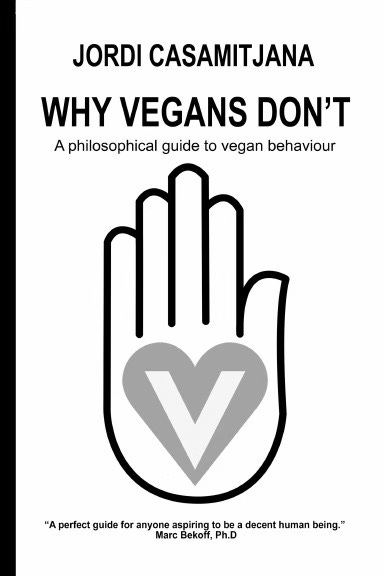
I also tackle the grey areas and issues still debated within the movement (backyard eggs, oysters, insect flour, cultivated meat, ahimsa silk, etc.). So the book can also be useful to experienced vegans engaged in those debates, not only to new vegans and vegan-curious people trying to understand why we behave in the way we do. Why Vegans Don’t also differs from my previous book in that it is more of a reference book, whose chapters can be read in any order as they work as complete units (even each chapter has its own bibliography at its end). This new book is also more up-to-date, using more recent evidence, but it retains my style and voice as a zoologist (which is scientific but not over-academic), and draws from my personal experience anecdotally (which I think helps with readability).
From your base in London, you work independently on various vegan and animal rights campaigns and initiatives. What are you presently working on? How do you set priorities when there are so many competing needs?
Currently, my profession and main activism are being a full-time writer. I have played many roles in my life within the animal protection and veganism movements, but writing is my focus. I am freelance. I write for whatever organisation hires my services about the issues that are hot at the time. I only write about veganism and animal protection issues. I am selective about the issues I write about, but so are my clients, which explains that you will read in my books about some controversial issues (like fake meats) that I have not written about that much before in the articles and blogs I have been commissioned to write. I suppose you could also say that I have become a journalist of sorts, as many of my articles are short news pieces, interviews, reviews, etc.
Altogether, since I made writing my profession in 2020, I have published more than 2,500 pieces. I definitely reach many more people now with my writing than with any other form of activism and campaigning I have done before — and I tried many — so I am happy with it. I want to keep doing it as long as I can. However, I am very aware that I may not have that long in this profession now that AI seems to be taking over many things, especially writing. I am ready for whatever is new on my horizon if my clients begin replacing me with my AI version. Public speaking is something I have always done, but recently I decided I want to do more (perhaps because seeing a real human talking may be something people will still value in a AI dominated world). I am participating in several events this year where I hope to have a say on the issues I think need to be discussed. Overall, I would say that my campaigning has shifted toward meta-campaigning (having vegans as my audience, rather than doing vegan outreach), because I think I am of an age where the “teacher” stereotype fits me better. I believe I can help the movement to resist debilitating internal and external forces by using my experience and my particular brain architecture.
What advice would you give to someone who is starting to want to make a difference for animals?
In my opinion, the most important thing one should do is to become a vegan and an animal rights advocate. With this, I mean to adopt the philosophy of veganism to the full (therefore becoming an ethical vegan) and the philosophy of animal rights (not of animal welfare), and not to half-do it by first trying vegetarianism, flexitarianism, reducetarianism, etc. Gradual changes will be dictated by the logistical obstacles you may encounter in real life, but the philosophies should not be acquired gradually. You either embrace them to the full at once, or you don’t, as the only obstacles you may find when attempting to do so would be internal (psychological), not external.
Applying the philosophies may take time to perfect, but they should not be diluted to facilitate such application. My advice would be to focus on embracing the philosophies first before deciding how you should behave (and in this regard, my books may help, and that’s why I wrote them). Once the philosophy is understood, the right behaviour will flow naturally. However, most importantly, once you adopt the philosophies, don’t assume you have arrived at some sort of enlightenment where you can relax. By adopting the philosophy of veganism, your veganisation process has just begun, and it will never end. You should strive to become a better vegan every day, and be humble enough to see yourself as an equal to everyone else who is still indoctrinated into carnism —the relics of which might still be active in your brain. You may be further in your veganisation process than others, but this does not make you better or allows you to look down on them.
There is a lot of work to do to build the vegan world, and we need the collective effort from everyone to build it. If you want to make a difference, join the movement with an interest in helping out. The right action will come from the right attitude.
I found this interview illuminating, especially the point that adopting the philosophy of veganism first — together with the framework of animal rights rather than protectionism — provides the foundation from which consistent behavior can naturally flow. That emphasis on philosophy before tactics feels important at a time when “plant-based” behavior can sometimes become detached from the deeper ethical commitment to animals as sentient beings with their own lives and interests.
Thank you, Kim, for the thoughtful interview, and Jordi for the clarity and depth of your reflections. I’m looking forward to reading Why Vegans Don’t and continuing to explore the ideas you’ve laid out here.
Interesting! I’d love to understand his ethos behind eschewing m*lk. I think these products are important to help people who want to be vegan make that transition but I wonder if he is making his own versions at home and it’s an anti-capitalist reasoning… Food for thought!